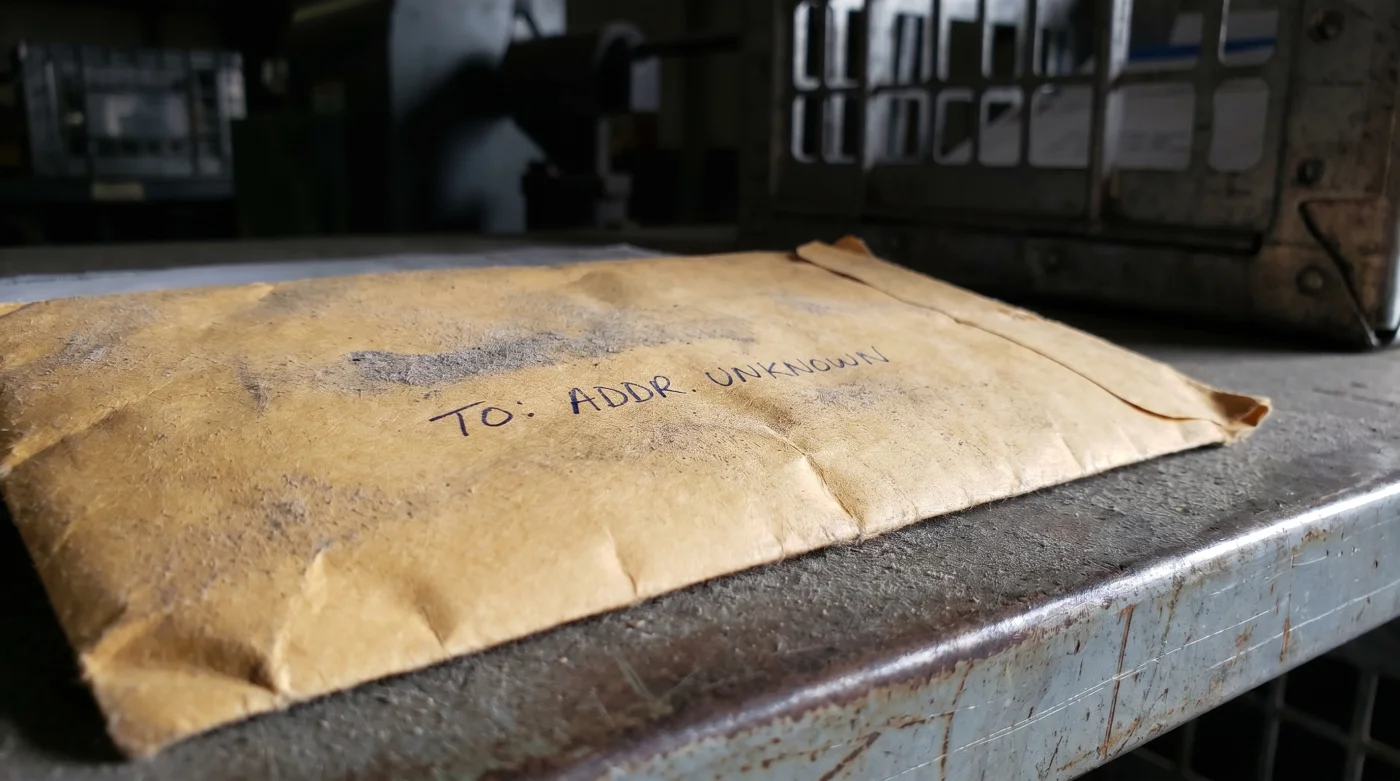
The morning ritual usually begins with the dull, satisfying slap of envelopes hitting the hallway floor. You expect the familiar shuffle of the postie on the driveway, a comforting rhythm that has dictated British mornings for generations. But lately, that rhythm has started skipping beats, leaving empty spaces where birthday cards, invoices, and handwritten notes used to land.
We trust the pillar box inherently. You press a paper envelope through that narrow red slit, trusting a vast, invisible network to carry your thoughts across the country. It is an assumption built on a century of guarantees—the belief that second-class merely meant ‘slow but certain’, a steady march taking exactly two to three days regardless of the weather or the weight in the canvas sack.
The reality of the modern sorting office tells a distinctly different story. What was once a unified stream of national correspondence has quietly fractured into a tiered hierarchy of urgency. The simple act of attaching a traditional, non-barcoded stamp has subtly downgraded your mail from a guaranteed delivery schedule to something far less predictable.
You are left waiting for envelopes that sit in silent limbo. A quiet institutional pivot has changed the very definition of standard mail, stripping away the urgency that once applied to every single letter bearing the monarch’s profile.
The Phantom Priority Lane
Think of the postal network not as a single flowing river, but as a heavily congested motorway during a bank holiday weekend. Recently, an invisible barrier was lowered across the slower lanes. A silent regulatory shift has allowed a fundamental change in how non-barcoded standard letters are handled, effectively removing the safety net of delivery timeframes for specific regional postcodes.
You are no longer paying for a designated timeframe. When you lick a second-class stamp, you are now merely buying a ticket for the carriage, with no promise of when the train will actually arrive. The system is designed to prioritise the trackable, the barcoded, and the highly lucrative commercial parcels, leaving standard letters sitting in holding pens until the pressure on the sorting machines finally eases.
This is the crux of the disruption. The expectation of a universal, flat-rate guarantee across the entire United Kingdom has quietly evaporated. For decades, the charm of the post was its egalitarian nature; a letter to a remote Scottish isle held the same delivery standard as a note sent across London. Now, the postcode dictates the priority, and the lack of a barcode provides the operational excuse to let it wait.
Watching this transition happen in real-time, Arthur Pendelton, a 58-year-old former logistics manager at a major sorting hub in the Midlands, notes the dramatic shift. He describes the modern sorting floor as a triage ward where standard envelopes without digital trackers are treated like mild ailments. ‘We used to clear the floor every single night, no exceptions,’ Arthur recalls. ‘Now, if a tray of non-barcoded second-class letters gets backed up due to parcel volume, they stay exactly where they are. There is no operational penalty for leaving them behind anymore.’ It is a quiet admission that fundamentally changes how you must approach your weekly admin.
- BREAKING: Local councils begin 300-pound spot fines for this common wood burning stove mistake
- The one-minute sharpening hack that stops your lawn from turning yellow
- Why chefs refuse to wash cast iron skillets with boiling water
- Apple technicians warn against this common overnight charging habit
- The diamond-cut alloy wheel feature secretly costing UK drivers thousands in repairs
- Women over 50 are ditching hyaluronic acid in winter-here is the clinical reason why
- The single sheet of parchment paper error ruining your air fryer chips
- The prohibited boiler setting plumbers use to slash winter heating bills by 300 pounds
- Mechanics reveal the 10-second WD-40 trick that restores clouded headlamps instantly
Adapting to the Postal Redline
Ignoring this quiet pivot will inevitably catch you off guard, especially when sending anything remotely time-sensitive. How you adapt depends entirely on what you are sending through the ether, and understanding which adjustment layer fits your specific needs.
For the Micro-Trader
If you are sending out small crafts, printed invoices, or lightweight goods, the old habit of relying on standard second-class is now a severe liability. Your customers still expect prompt arrivals, completely unaware of the institutional bottleneck holding up their purchases. Moving to tracked 48-hour services or investing in barcoded postage solutions is no longer an optional upgrade; it is basic brand protection. You cannot afford to have your reputation tarnished by a systemic delay that is entirely out of your hands.
Those managing household admin face a different, but equally frustrating, set of hurdles. Sending physical forms to the DVLA, settling council tax arrears via cheque, or posting signed contracts now carries a hidden risk. A missed deadline due to a delayed standard letter is still treated as your missed deadline. You must treat these envelopes as critical freight, requiring digital postage or first-class barcoded stamps to force them out of the slow lane.
For the Relational Sender
If you are posting a birthday card or a handwritten note of condolence, you must recalibrate your internal calendar. If you are posting to a postcode affected by the new service reductions—particularly rural areas in Wales, the Scottish Highlands, and deeper parts of Cornwall—a second-class stamp is essentially a gamble. You must adopt a ‘post a week early’ mindset, treating the pillar box like a slow-moving ocean current rather than a reliable courier.
Navigating the Barcoded Era
Surviving this industry shift requires a more deliberate approach to your outbox. You must stop viewing postage as a universal flat rate and start seeing it as a menu of distinctly different services. Take back control of your correspondence by applying a few rigorous new rules to your desk.
- Audit your stamp drawer immediately and exchange any outdated non-barcoded stamps through the official postal swap scheme to avoid outright rejection.
- Identify if your recipient lives in a known delivery-squeeze postcode, often those heavily reliant on single-route rural vans.
- Use the mobile app to purchase digital postage codes; these are natively tracked within the sorting system and bypass the blind spot of traditional stamps.
- Batch your non-urgent mail and drop it off early in the week, deliberately avoiding the weekend parcel-rush hangover that clogs the local sorting machines.
Your tactical toolkit for posting now revolves around three specific principles. First, the Rule of Seven: always allow seven full days for second-class, non-barcoded mail to reach non-urban postcodes. Second, the Barcode Bypass: always choose the digital QR-code stamp option via the app for letters containing time-sensitive paperwork. Finally, the Local Box Logic: post directly at the sorting office box rather than a street corner pillar box to shave a full 24 hours off the initial collection time.
Redefining the Value of Arrival
Mastering these unseen constraints means you are no longer at the mercy of a silent regulatory shift. You choose when urgency matters and when it does not. There is a strange kind of freedom in understanding the physical mechanics behind the delays.
When you stop expecting the impossible from a system that has fundamentally changed its own rules, the frustration begins to dissipate. A letter arriving a week later than planned ceases to be a failure of the system and becomes a deliberate, slow-paced gift of your choosing.
By acknowledging the reality of the sorting floor, you reclaim the peace of mind that comes from simply knowing how the machinery truly works. You are no longer dropping envelopes into a void of blind faith; you are making calculated decisions about exactly how and when your words will arrive.
A stamp is no longer a promise of speed; it is merely a request for eventual transit.
| Service Tier | Sorting Floor Reality | Added Value for You |
|---|---|---|
| Non-Barcoded 2nd Class | Held back during high parcel volume periods. | Forces you to plan ahead and batch routine post. |
| Barcoded 2nd Class | Scanned and integrated into the primary sorting queue. | Provides baseline reliability for standard correspondence. |
| Digital App Postage | Treated as priority trackable mail internally. | Guarantees movement and offers digital proof of sending. |
Frequently Asked Questions
Is my old standard stamp completely useless now? No, but it acts as a low-priority marker. It will eventually get there, but without any operational urgency from the sorting team.
Which postcodes are hit the hardest? Rural and semi-rural areas outside major urban centres face the longest indefinite delays due to consolidated delivery routes.
Do digital QR stamps actually move faster? Yes. Because they are read by the automated parcel scanners, they bypass the manual sorting backlog completely.
Can I still claim compensation for late second-class post? The quiet regulatory shift has made claiming for standard second-class delays nearly impossible, as the timeframes are no longer strictly guaranteed.
Should I just use first class for everything? Only for critical documents. For daily mail, adapting your sending schedule by a few days is far more cost-effective.