The crisp, biting air of a November morning in the Peak District carries the faint, metallic tang of road grit. You walk towards your newly upgraded saloon, your eyes catching the sharp, iridescent glint of those factory-fresh diamond-cut alloy wheels. They look remarkable, catching the low winter sun like a bespoke chronograph strapped to your tyres.
But that brilliant shine hides a costly, fragile reality that most dealerships gloss over. You opted for the premium wheel package, assuming that paying an extra £1,000 meant securing better engineering, tougher materials, and a finish designed to outlast the car.
The truth is entirely the opposite. That razor-sharp machined face, sealed only by a whisper-thin layer of clear lacquer, is currently fighting a losing battle against the British road network. The moment a gritter lorry spreads its payload of rock salt across the A-roads, the countdown begins.
It feels deeply counterintuitive that a highly sought-after premium feature is actually the most vulnerable component of your vehicle. Yet, this exact aesthetic choice is secretly costing UK drivers thousands of pounds in specialist repairs, trapping them in a cycle of corrosion and compromise.
The Illusion of the Premium Upgrade
To understand why this happens, you have to look at how these wheels are manufactured. Standard alloy wheels are primed, painted, and heavily lacquered, creating a robust physical barrier. Diamond-cut wheels, however, undergo an aggressive secondary process. The painted face is shaved off on a precision lathe to reveal the bare, gleaming aluminium beneath.
A thin layer of clear lacquer is then sprayed directly onto this polished metal. Think of it like wearing a silk shirt to a Sunday league football match; it looks magnificent until the mud starts flying. Aluminium and clear lacquer do not form a chemical bond in the same way primer and paint do.
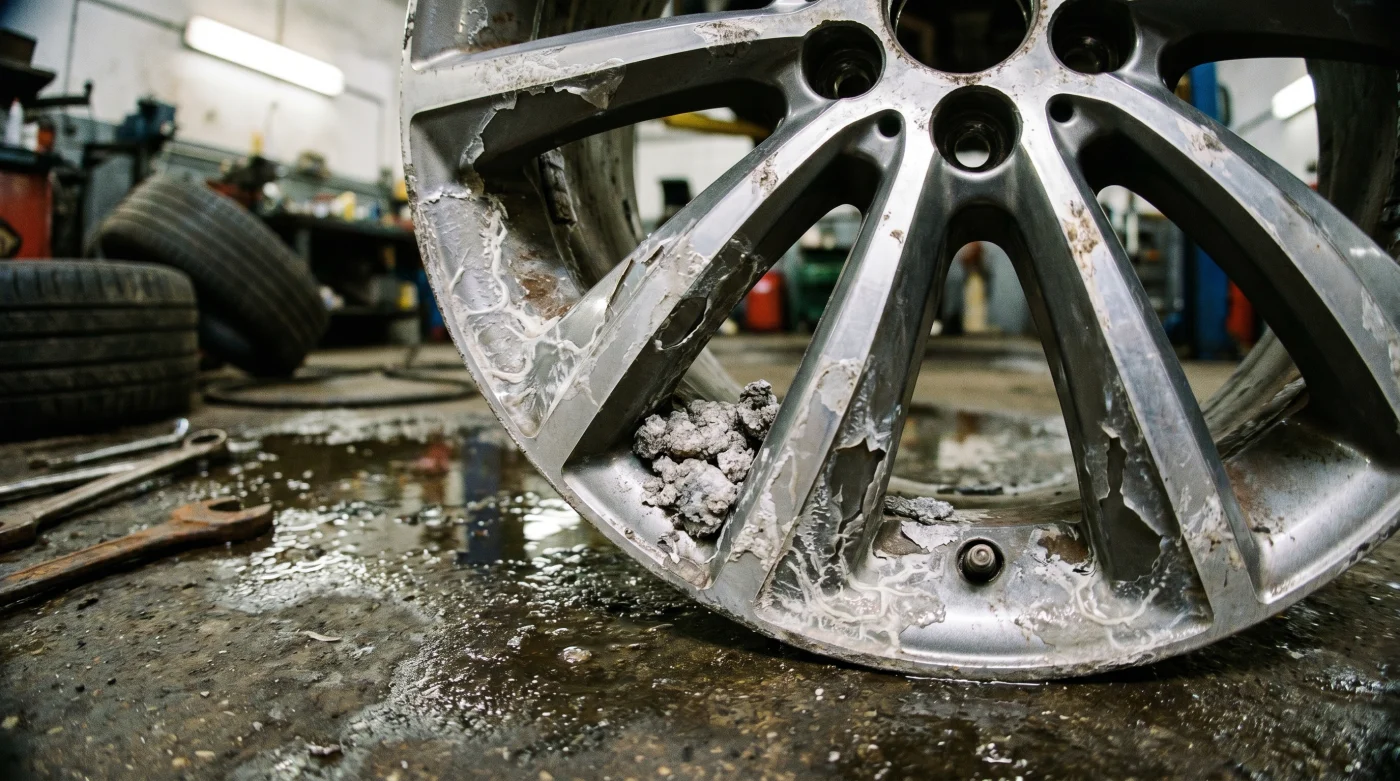
The moment a microscopic stone chip breaches that clear coat, moisture and road salt slip underneath. Because aluminium oxidises rapidly, it creates a white, powdery corrosion that spreads like roots under the lacquer. The industry casually calls this the ‘white worm’.
Once this moisture barrier is broken, local repairs become mathematically impossible. You cannot simply touch up a diamond-cut finish in your driveway or ask a mobile mechanic to blend a bit of paint over the scrape.
Mark Davies, a 48-year-old independent wheel refurbisher from the outskirts of Birmingham, sees this financial trap spring shut every single day. Standing in his workshop, surrounded by the scent of heavy-duty degreasers and metallic dust, he points to a stack of peeling, premium wheels from a high-end German estate car.
‘People bring these in after slightly grazing a kerb outside the supermarket,’ Mark explains. ‘They expect a quick £50 touch-up. I have to tell them the whole wheel needs to be sent away, stripped, put on a CNC lathe to re-cut the damaged face, and re-lacquered. It costs hundreds, and you can only recut a wheel one or two times before there isn’t enough metal left to safely shave away.’
- Women over 50 are ditching hyaluronic acid in winter-here is the clinical reason why
- The single sheet of parchment paper error ruining your air fryer chips
- The prohibited boiler setting plumbers use to slash winter heating bills by 300 pounds
- Mechanics reveal the 10-second WD-40 trick that restores clouded headlamps instantly
Categorising the Winter Damage
Not every driver experiences this depreciation trap at the same speed. How you use your vehicle dictates just how quickly that fragile lacquer will fail under the strain of the UK climate.
For the Showroom Buyer
When ticking options on a new lease or purchase, the diamond-cut upgrade often sits tantalisingly at the top of the list. Dealerships rarely explain that this finish requires fastidious, almost obsessive cleaning. If you are leasing, returning the car with ‘milky’ corroded wheels can trigger punitive penalty charges.
For the Second-Hand Hunter
If you are inspecting a used car on a damp Saturday afternoon, run your bare thumb along the outer edge of the wheel rims. Look for jagged white lines creeping beneath the shiny surface. If the white worm has taken hold, you are looking at a mandatory £400 refurbishment bill that you should immediately deduct from the asking price.
For the Daily Commuter
Navigating narrow multi-storey car parks, tight parallel spaces, and pothole-ridden B-roads makes a minor alloy scrape an inevitability. If your commute involves heavy traffic and road salt, a standard powder-coated wheel will shrug off the grit, while a diamond-cut face will immediately begin to fail at the site of the first scratch.
Halting the Financial Bleed
If you already own a vehicle with these intricate wheels, you are not entirely powerless. Protecting them requires a shift in your weekend routine, moving away from aggressive chemical cleaners and towards mindful, preventative maintenance.
The goal is to seal the microscopic pores in the lacquer before the winter salt takes hold. It requires a gentle touch and a strict refusal to use the harsh acidic wheel cleaners found in automatic car washes.
- Rinse the wheels entirely with cold, clean water before you apply any soap, ensuring the loose grit is dislodged rather than dragged across the lacquer.
- Use a strictly pH-neutral wheel shampoo. Acid-based traffic film removers will aggressively degrade the clear coat over time.
- Agitate the dirt with a soft-bristled detailing brush, rather than a stiff nylon scrubbing block.
- Dry the metal completely with a microfibre cloth. Leaving hard tap water to dry on the surface leaves mineral deposits that eat into the finish.
- Apply a dedicated high-temperature ceramic wheel sealant every six months. This acts as a sacrificial barrier against brake dust and moisture.
The Tactical Toolkit: To keep the elements at bay, you need nothing more than a bucket of warm water, a pH-neutral shampoo, a boar-hair detailing brush, and a bottle of spray-on ceramic coating.
The most vital lesson here is that consistency beats expensive chemicals every single time. A gentle weekly rinse will out-perform a harsh bi-monthly acid scrub.
Redefining Automotive Value
True automotive luxury shouldn’t induce a cold sweat every time you parallel park near a granite kerb. It is deeply liberating to realise that the most expensive option on the dealership list is not necessarily the most intelligent one for your daily life.
Choosing a solid, painted powder-coated wheel over a fragile diamond-cut face is an act of quiet rebellion against the depreciation trap. You are actively choosing a component that withstands the brutality of the British winter, rather than one that surrenders to it.
When you stop worrying about microscopic scratches and creeping rot, you reclaim the joy of driving. Your vehicle goes back to being a reliable companion for cross-country drives and weekend getaways, rather than a fragile museum piece crying out for expensive, specialist intervention.
The true cost of a vehicle is never on the window sticker; it is buried in the fragility of the parts you cannot easily replace.
| Key Point | Detail | Added Value for the Reader |
|---|---|---|
| The Vulnerability | Bare aluminium relies on a thin, non-bonding clear coat. | Helps you identify why winter salt causes irreversible white corrosion. |
| The Repair Reality | Cannot be touched up locally; requires full CNC lathe recutting. | Saves you from wasting money on ineffective touch-up pens. |
| The Maintenance Fix | pH-neutral washing and twice-yearly ceramic sealing. | Provides a clear, cheap routine to double the lifespan of your wheels. |
Frequently Asked Questions
Can I repair a scraped diamond-cut wheel myself?
No. Because the surface is precisely machined metal, sandpaper and touch-up paint will only leave a dull, mismatched patch that fails to seal out moisture.Why do dealerships push these wheels if they corrode?
They look spectacular in a brightly lit showroom. The visual impact drives premium package sales, while the long-term corrosion issues fall onto the second owner.Is powder-coating a better alternative?
Absolutely. Having a peeling diamond-cut wheel fully stripped and powder-coated in a solid colour provides a thicker, dramatically more durable finish against UK road salt.How many times can my wheels be recut?
Usually only once or twice. Each time a CNC lathe recuts the face, it shaves off a few millimetres of structural aluminium. Eventually, the wheel becomes too thin and unsafe.Will a ceramic coat stop kerb damage?
It will not protect against physical metal scrapes, but it will provide an excellent invisible shield against the salt and brake dust that accelerates the white worm corrosion.