November morning. Frost on the window pane. The familiar metallic click of the hall thermostat echoing through the quiet house. You wrap a heavy woollen jumper tighter around your ribs, having obediently nudged the dial down to a frugal eighteen degrees. You shiver, convinced this minor suffering is the only way to survive the winter energy hikes.
But beneath the stairs, inside that humming white metal box fixed to the wall, something entirely counterproductive is happening. The burner roars to life, firing water through your pipes at a blistering eighty degrees Celsius. You are treating the symptom of high bills while completely ignoring the mechanical disease.
The standard advice handed out by every energy provider—turn the room thermostat down to save money—is technically sound but strategically flawed. It misses the physical reality of how modern British heating networks actually function. You are sitting in a tepid, uncomfortable room while your boiler quietly wastes its true potential.
To truly cut costs without losing physical comfort, you must stop looking at the plastic dial on the hallway wall. The secret lies in a poorly understood, often discouraged adjustment located on the digital interface of the boiler itself.
The Combustion Illusion and the Condensing Myth
If you bought a modern boiler in the United Kingdom over the past eighteen years, it is legally required to be a condensing model. Yet, millions of these expensive units have never actually condensed a single drop of water since the day they were installed. Think of it like driving a performance car on the M1 motorway permanently stuck in second gear; it makes a terrible noise, burns through excessive fuel, and ultimately achieves very little.
To capture the waste heat from the exhaust gases—which is the entire mathematical point of a condensing boiler—the water returning from your radiators must be incredibly cool. It needs to drop below fifty-four degrees to trigger the phase change. If the water leaves the boiler at eighty, it generally returns at roughly sixty-five. At sixty-five degrees, the physics of condensation simply break down. Your modern, expensive boiler acts exactly like a wasteful, inefficient 1990s relic.
By lowering the flow temperature—the heat of the water travelling outward to the radiators—rather than fiddling with the ambient room thermostat, you force the internal machinery to perform as originally designed. The radiators will not burn your hands when brushed against, but they will stay warm for significantly longer periods, maintaining an even, gentle ambient temperature that drastically reduces the volume of gas consumed.
David Miller, a 54-year-old heating engineer from Leeds, spends his winters quietly correcting this specific industry flaw. “When they roll off the factory floor, the flow temperature is cranked to absolute maximum,” he explains over a mug of strong black tea, wiping soot from his hands. “Manufacturers do it because plumbers hate call-backs from customers complaining the house takes an hour to warm up. So, we leave it at eighty degrees. It heats the rooms in ten minutes, but it costs you an absolute fortune in wasted gas. Dropping it to sixty degrees changes the entire thermal dynamic of the property.”
Adjusting for Your Specific Architecture
Not all plumbing configurations react the exact same way to a drastic flow temperature reduction. You must categorise your home setup before pressing any buttons on the digital fascia. The approach varies based on the age of your pipes and the specific type of water storage you possess.
If you have a combination boiler—meaning no hot water cylinder sitting in an upstairs airing cupboard—you hold the absolute strongest hand. You can confidently reduce the heating flow temperature all the way down to fifty-five degrees without affecting the heat of your morning shower. The domestic hot water that flows to your taps is controlled by a completely separate internal mechanism.
Those with older system boilers, which pump heat into a stored hot water tank, require a slightly firmer touch. You cannot drop the main flow temperature below sixty-five degrees under any circumstances.
If you lower the heat source too far, the stored water cylinder will never reach the critical sixty degrees required to prevent Legionella bacteria from breeding. The savings are still highly substantial, but basic hygiene must always dictate the lower temperature limit.
If you live in a draughty Victorian terrace property with single-panel radiators, a sudden drop in flow temperature might leave the high-ceilinged rooms feeling somewhat sluggish. Your approach to this adjustment should be highly gradual.
Nudge the dial down by just five degrees every weekend. Find the precise sweet spot where the boiler begins to condense efficiently, but the living room still feels like a refuge from the damp British evening. You will notice the heat feels softer, less aggressive, and far more consistent.
The Mindful, Tactile Execution
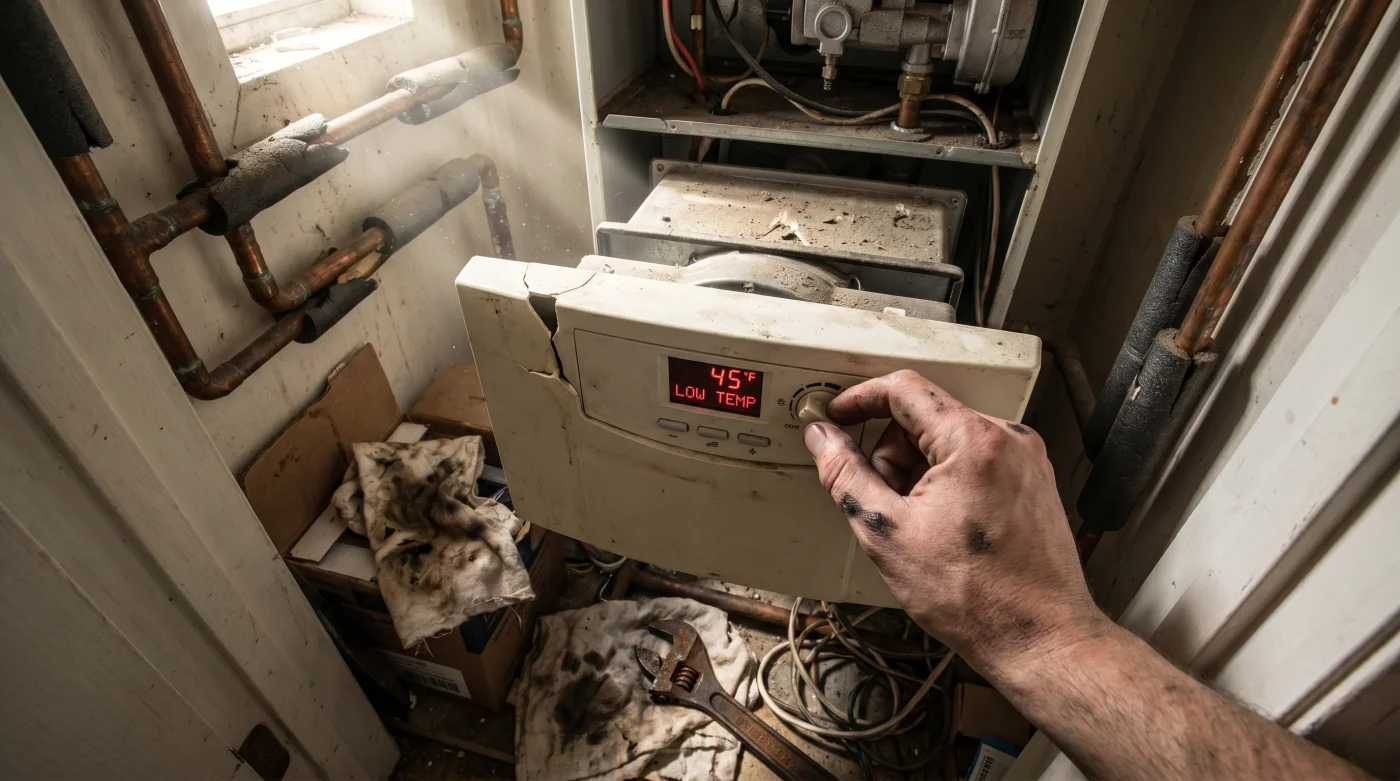
Executing this change takes less than sixty seconds. It does not require screwdrivers, wrenches, or the removal of the sealed boiler casing. Approach the control panel with a clear intent, focusing solely on the central heating interface.
Most units feature two distinct dials or digital icons: one depicting a tap, the other a tiny, stylized radiator. Ignore the tap entirely. You are merely reprogramming the central heating output, a highly impactful task that requires nothing more than pushing a button.
Your tactical toolkit is incredibly simple. You need zero mechanical knowledge and absolutely no technical background to make this adjustment safely.
Follow these precise, mindful actions to secure your winter efficiency upgrade:
- Locate the radiator icon on the front interface of your boiler unit.
- If it is a digital screen, press the select button until the radiator symbol begins to flash.
- Reduce the digital number from the standard eighty degrees to a highly conservative sixty degrees.
- Press confirm to lock in the setting, or simply leave the physical analogue dial pointing to the newly adjusted number.
- Wait for the boiler to cycle; you will notice the radiators emit a gentle warmth rather than an aggressive, scorching heat.
This is a subtle physical shift that creates massive financial ripples. You are retraining the system to sip fuel rather than gulp it aggressively.
Warming the House, Not the Street
True thermal comfort is not about explosive bursts of heat followed by a rapid, shivering cooling phase. It is about steady, quiet, invisible maintenance. By deliberately manipulating the flow temperature, you stop fighting the natural physics of your home and start working harmoniously alongside them.
You are no longer paying hard-earned pounds sterling to send valuable waste heat up the flue pipe and straight into the cold November sky. Instead of sitting with your coat on indoors just to save a tenner, you have entirely rewired the financial logic inside your plumbing.
When the heavy frost settles on the pavement outside, and the dark evening rapidly draws in, you will hear the boiler fire up with a different rhythm. The radiators will warm with a gentle, sustained pulse that feels entirely natural.
You will sit back in your chair, safe in the knowledge that every ounce of gas burned is actually staying within the brick walls of your property. You are keeping the cold at bay exactly as the engineers intended, protecting your bank balance without sacrificing an ounce of comfort.
“A boiler running at eighty degrees is a boiler throwing thirty percent of your hard-earned money straight out of the exhaust pipe.” – David Miller, Heating Engineer
| Key Adjustment | Technical Reality | Added Value for the Reader |
|---|---|---|
| Lower Flow Temperature to 60°C | Triggers latent heat recovery in the exhaust | Slashes monthly gas usage by up to 20% |
| Leave the Tap Dial Alone | Domestic hot water runs entirely independently | Maintains perfect shower pressure and heat |
| Keep Ambient Thermostat Steady | Removes the need to constantly ‘blast’ the heating | Creates a highly consistent, draft-free room |
Frequent Heating Dilemmas
Will my house take longer to warm up? Yes, slightly. The radiators emit a lower, constant heat, adding about fifteen minutes to the initial morning warm-up phase, but maintaining the temperature for far longer.
Can I do this on an older oil boiler? No. This specific financial tactic relies exclusively on the modern condensing technology found inside contemporary gas units.
Does this increase wear and tear on parts? Quite the opposite. Running the system at a lower temperature drastically reduces thermal stress on the internal copper heat exchanger.
What if my radiators feel barely warm to the touch? If the house is successfully reaching the desired twenty degrees on the hall thermostat, tepid radiators are a brilliant sign of perfect, efficient balance.
Should I turn off radiators in empty spare rooms? Only if the internal doors are kept tightly shut. Otherwise, cold air bleeds constantly into the hallway, forcing the boiler to work twice as hard to compensate.