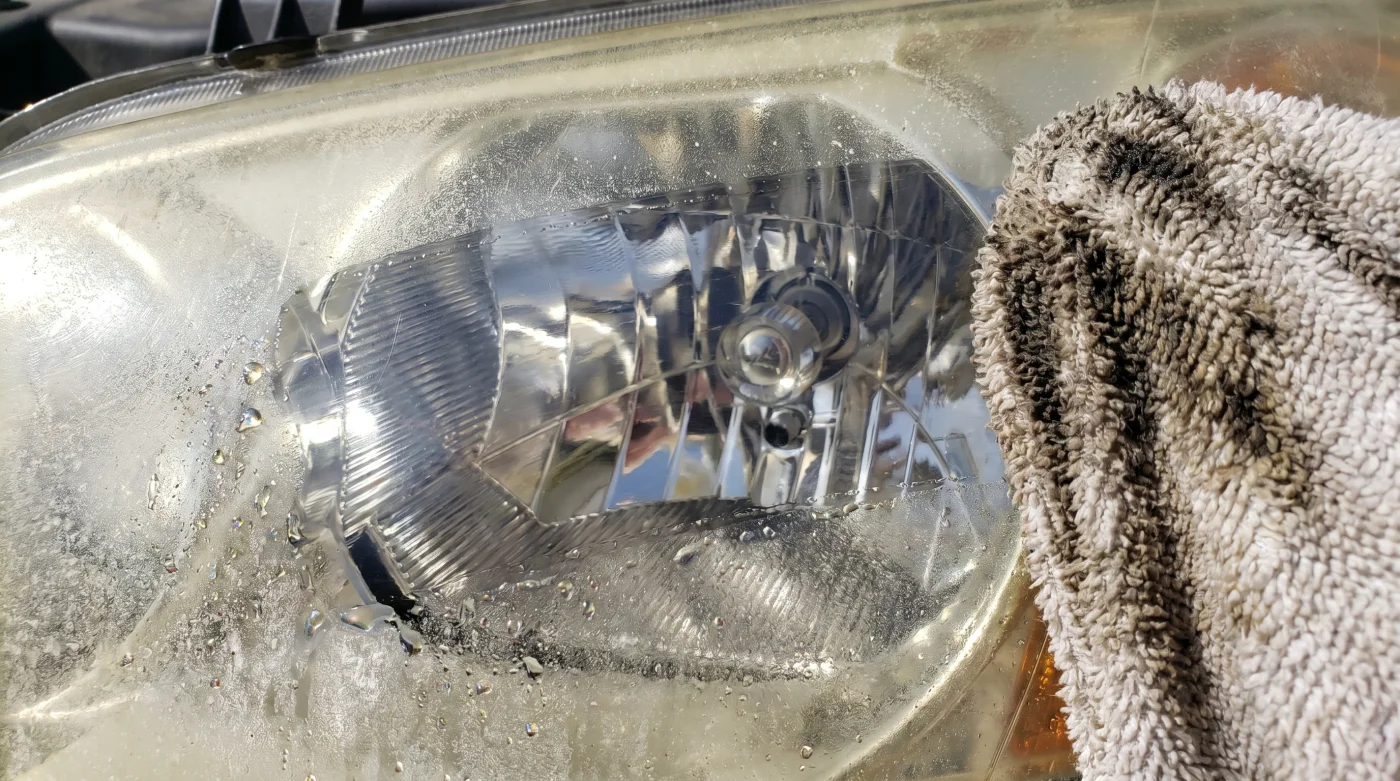
You step onto the damp gravel of your driveway, the sharp bite of November air catching in your throat. Your car sits under the amber glow of a streetlamp, looking tired. You walk around to the front, running a thumb over the frosted, yellowed plastic of the headlamp casing. It feels rough to the touch, like tracing the textured surface of an old lemon rind.
The MOT test is looming, and that milky glaze is a guaranteed advisory, if not an outright failure. The standard advice dictates spending forty quid on a multi-stage restoration kit, armed with polishing pads, masking tape, and an afternoon of elbow grease. But a quiet truth hums in the background of busy garages across the country; a method that avoids unnecessary hard labour.
You do not need an abrasive wheel. You do not need an hour of sweating over the front bumper. There is a simple, highly effective chemical reaction waiting inside a familiar blue and yellow aerosol can that likely already sits on your garage shelf.
The Chemistry of Clarity
When you look at a clouded lens, you are looking at UV oxidation—a layer of microscopic sunburn on the polycarbonate plastic. The automotive industry wants you to believe this needs sanding down, physically removing layers of plastic until you hit clear, undamaged material underneath.
Think of it like trying to remove a stubborn pencil mark from a piece of paper. You could rub away the top layer of paper with heavy-duty sandpaper, risking a hole in the page entirely. Or, you could realise that the right solvent acts like a soft eraser.
That familiar can of water displacement fluid contains a specific blend of aliphatic hydrocarbons. When applied to oxidised polycarbonate, it does not scratch or abrade. Instead, it seeps into the porous, sun-damaged surface. It temporarily dissolves the hazy oxidised layer, replacing the dry, fractured plastic with a smooth, optically clear surface in a matter of seconds.
Arthur Pendelton, a 62-year-old independent MOT tester working out of a draughty, brick-built garage in Halifax, knows this better than anyone. Watching a customer fret over a failed beam pattern due to severe hazing, Arthur simply reaches into his overalls, pulls out a rag and a can, and wipes away five years of sun damage in ten seconds. ‘They always think I have swapped the bulb,’ he mutters, wiping his hands. It is a quiet hack, a tactile modification that shifts a tedious physical chore.
The secret is not just about passing a mandatory test; it is about reclaiming your visibility on dark country lanes. It proves that sometimes the most effective solutions are sitting in plain sight, waiting for the right application.
Tailoring the Fix: Commuters, Tourers, and City Dwellers
Not all clouding is created equal. Depending on where your car lives and how you use it, the approach to maintaining that newly revealed clarity shifts. Success relies entirely on tailoring your specific chemical approach.
For the Rural Driver: If you navigate unlit B-roads dodging badgers and potholes, your lights suffer from a combination of mud scoring and agricultural dust. You need maximum fluid penetration. Apply the spray generously, letting it sit for an extra five seconds to break down the grime before wiping.
For the Motorway Tourer: High speeds mean your headlamps are peppered with microscopic road grit and salt. The oxidation here is usually more uniform, presenting as a stubborn, flat matte finish. A quick wipe across the width of the lens using an even, sweeping horizontal hand motion.
For the City Commuter: Stop-start traffic and exhaust fumes create a greasy, yellowed film. You might need to perform a double-pass, ensuring the hydrocarbons cut through the oily urban residue before they can tackle the UV damage underneath.
The Ten-Second Ritual
Approaching this task is not about brute force. It is a mindful, minimalist guided chemical action. You are manipulating a reaction, not scrubbing a dirty frying pan. Treat the plastic delicately and deliberately.
Gather your materials before you begin. You want a cool, overcast day—direct sunlight evaporates the solvent before it can act. The lens should feel cold to the touch.
- The Tactical Toolkit:
- One can of standard water displacement fluid (no specialist variants required).
- Two clean, dry microfibre cloths (avoid paper towels; they leave lint and microscopic scratches).
- Mild soapy water in a spray bottle.
- The Method:
- Mist the headlamp lightly with soapy water and dry it completely to remove loose grit.
- Spray the fluid directly onto your first microfibre cloth until it is damp, rather than spraying the car. This prevents overspray onto your paintwork.
- Wipe the cloth across the lens in firm, horizontal strokes. Watch as the yellow haze immediately melts into the cloth.
- Take the second, dry microfibre cloth and buff the lens in small, tight circles to remove any oily residue.
Beyond the Glass
Wiping away that cloudy film does more than satisfy a mechanic or improve the aesthetic of an ageing vehicle. It subtly alters how you interact with the road, bringing a profound return of driving confidence.
Driving at night with compromised lights creates a subtle, persistent tension. You find yourself squinting, gripping the steering wheel tighter, anticipating hazards you cannot quite see. Restoring that crisp, white beam brings immediate peace of mind.
It reminds us that we do not always need to replace what is faded. Sometimes, with the right touch and a bit of practical chemistry, we can instantly revive what we already have.
True mechanical elegance isn’t replacing a part; it’s understanding the material well enough to make it heal itself.
| Method | Time & Cost | Added Value for the Reader |
|---|---|---|
| Polishing Kits | £30-£50, 2 hours | Permanent removal but high effort and risk of sanding damage. |
| Toothpaste Hack | £2, 15 mins | Mild abrasive action, leaves a minty smell but requires heavy scrubbing. |
| The Fluid Trick | £0 (already owned), 10 seconds | Instant clarity, zero physical exertion, acts as a temporary water repellent. |
Frequently Asked Questions
Is this a permanent fix?
No, it lasts a few weeks. It is a rapid treatment, perfect for MOT day or sudden night trips across unlit roads.
Will it damage my car paintwork?
Not if you spray the cloth rather than the lens directly. Wipe off any accidental overspray immediately.
Can I use this on glass headlamps?
Glass does not suffer from UV oxidation in the same way. This trick is specifically for modern polycarbonate plastic lenses.
Does it matter which version of the spray I use?
The standard multi-purpose formula is what you need. Avoid the specialist lithium grease or silicone variants.
What if the clouding is on the inside?
This method only tackles exterior UV damage. Condensation or dirt inside the sealed unit requires mechanical dismantling.