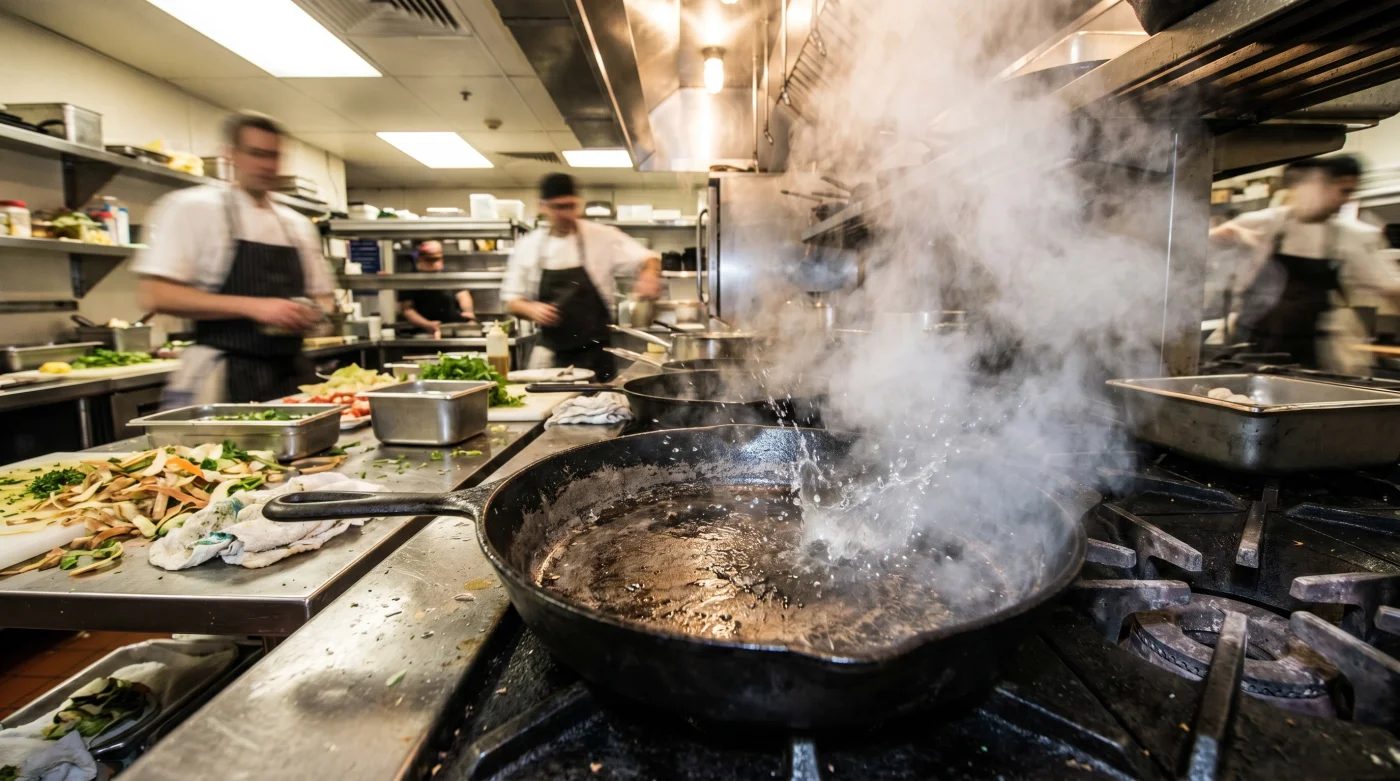
The kitchen smells faintly of rosemary and charred beef. The plates are cleared, but sitting on the hob is the heavy black iron, slick with rendered fat and the dark remnants of dinner. It looks formidable, an anchor of traditional cooking resting on your stovetop.
Your instinct, driven by decades of washing-up liquid adverts and modern kitchen habits, is to reach for the kettle. Sterilise the lingering mess with a torrent of boiling water to melt the stubborn grease away. We are taught that extreme heat equals ultimate safety and cleanliness.
But watch a professional working the meat station at a busy gastropub during the Sunday lunch rush. They never expose that beautifully blackened surface to a rolling boil from a kettle or a pot. To them, the skillet is not a dead slab of metal; it is a finely balanced tool.
There is a physical tension in the iron that we often ignore at home. Pouring kettle-hot water over a cooling skillet doesn’t clean it; it structurally wounds it. The sudden clash of temperatures betrays the very nature of the material.
The Membrane Under the Microscope
To understand the pan, you must stop seeing it as a solid, indestructible hunk of factory metal. It is, instead, a fragile ecosystem. The black sheen you see is not paint or a chemical coating, but a living membrane of polymerised fat that has baked onto the iron over time.
That glossy finish is surprisingly delicate at a microscopic level. Think of brittle glass settling over a porous iron sponge. When you dump boiling water onto a skillet that has just dropped to room temperature, the iron expands violently underneath the surface of the oil layer.
This thermal shock microscopically cracks the seasoning layer before it can properly harden, cool, and bind to the iron. You literally fracture the very thing that stops your fried eggs from sticking to the base.
You won’t notice the damage immediately. But over a fortnight, your morning breakfast starts tearing. Tiny rust freckles appear along the rim. You blame the pan for losing its edge, entirely missing the quiet sabotage of your own aggressive hygiene routine.
Consider Elias Vance, a 42-year-old chef running a wood-fired coastal kitchen in Cornwall. He cycles through twelve cast iron skillets a night, searing thick scallops and venison over open flames. Ask him about the washing up, and he will tell you that boiling water is strictly banned from his pot-wash station. He cleans his pans with nothing more than hand-hot tap water and a fistful of coarse sea salt, treating the iron less like dead steel and more like resting muscle that needs time to recover.
- Apple technicians warn against this common overnight charging habit
- The diamond-cut alloy wheel feature secretly costing UK drivers thousands in repairs
- Women over 50 are ditching hyaluronic acid in winter-here is the clinical reason why
- The single sheet of parchment paper error ruining your air fryer chips
- The prohibited boiler setting plumbers use to slash winter heating bills by 300 pounds
- Mechanics reveal the 10-second WD-40 trick that restores clouded headlamps instantly
Tailoring the ‘Buy Once’ Logic
Cast iron is generational cookware, designed to endure for a century. To secure lifetime utility, you must adapt your care routine to how hard the pan is working on any given day.
For the Sunday Searing Purist
You pull the iron out once a week for thick-cut ribeyes. The residue is heavy, oily, and charred. Skip the tap entirely in this instance. Scrape the pan while it is still warm, then wipe it vigorously with a damp, coarse cloth. The residual oils are enough to protect it.
For the Daily Frier
If you use the skillet every single morning for bacon or eggs, your seasoning is constantly shifting and rebuilding. Wash it under warm tap water with a stiff bristle brush. The temperature must comfortably match the warmth of your hands, avoiding those sudden, damaging thermal spikes.
For the Heritage Restorer
Found a rusty, neglected pan at a Sunday car boot sale? You are building the delicate polymer layer from scratch. Your greatest enemy is sudden temperature changes. Baby the pan heavily. Let it cool completely before it ever touches a damp rag.
The Tactile Toolkit for Generational Iron
Maintaining your skillet is a grounding ritual, not a rushed, frantic chore. The process requires presence, moving away from aggressive scrubbing to thoughtful, minimalist maintenance that respects the chemistry of the pan.
Here is the exact protocol to preserve that non-stick glass layer without inducing thermal shock:
- Allow the pan to cool on the hob until you can comfortably rest your bare hand against the base.
- Run your tap water until it is warm to the touch—never steaming hot or freezing cold.
- Dislodge stuck food using a plastic scraper or a small square of interlocking chainmail.
- Rinse away the debris, pat the iron completely dry with a clean tea towel, and place it briefly back on a low heat to evaporate any lingering moisture.
- Rub half a teaspoon of cold-pressed rapeseed oil into the warm iron until the surface turns completely matte and dry.
Your tactical toolkit is incredibly minimal. A chainmail scrubber, scraper, and a dedicated cotton cloth are all you need to maintain the cooking surface for the rest of your life.
The Quiet Reassurance of Permanent Things
We live in a deeply disposable era, surrounded by mass-produced aluminium non-stick pans that inevitably peel, scratch, and flake off into our food, ending up in a local landfill after barely three years of use.
Mastering the temperature of your tap water feels like a tiny, almost insignificant detail. Yet it preserves something entirely permanent. A well-kept skillet will easily outlast your kitchen, your house, and eventually, you.
When you stop fighting the iron with boiling water and harsh chemicals, you start working with it. You build a surface that grows slicker, deeper, and noticeably more reliable with every passing meal.
It is a rare comfort in modern home cooking. Knowing the exact limits of the tools you rely on brings a profound sense of domestic calm, transforming a daily chore into an act of quiet preservation.
A cast iron pan is a living record of every meal it has cooked; treat the seasoning with respect, and it will effortlessly feed your grandchildren.
| Key Point | Detail | Added Value for the Reader |
|---|---|---|
| Thermal Shock | Boiling water forces the iron to expand rapidly beneath the polymer layer. | Prevents microscopic cracking, keeping the pan naturally non-stick. |
| Temperature Matching | Wash with water that matches the ambient warmth of the cooled pan. | Extends the lifetime utility of the cookware indefinitely. |
| Tactile Maintenance | Use chainmail and warm water instead of harsh detergents and kettles. | Reduces cleaning time to under two minutes while protecting the iron. |
Frequently Asked Questions
Can I use washing-up liquid on my skillet?
Yes. Modern washing-up liquids are mild enough not to strip hardened polymerised oil, provided you use a small amount and rinse thoroughly with warm water.What if food is heavily burnt onto the base?
Pour a handful of coarse sea salt into the dry, warm pan and scrub with a paper towel. The salt acts as an abrasive without tearing the delicate seasoning.Why does my cast iron look dull after washing?
A dull surface simply means the iron is naturally dry. Wiping it with a tiny drop of rapeseed oil while the pan is slightly warm restores the protective moisture barrier.Can soaking the pan loosen tough residue?
Never soak cast iron. Extended exposure to standing water invites rust to form in microscopic pores long before the iron is fully dry.How do I know if my seasoning is cracked?
If previously non-stick foods suddenly begin tearing, or if you notice a faint metallic taste alongside slight orange rust blooming on the surface, the layer has been compromised.