You stand at the edge of the patio, teacup warming your palm, watching the morning mist burn off the back garden. The scent of cut grass still lingers from Saturday’s effort, a sharp, green aroma that promises high summer. But instead of an emerald carpet, a bruised, yellowing tinge has crept across the surface, turning your pride into a sickly patchwork of straw.
You immediately suspect the soil underneath. You purchase expensive chemical feeds, convinced the root system is starving for nitrogen. You might even drag the sprinkler out, wasting precious water on ground that seems perfectly damp beneath the surface. The bags of granular iron sulphate begin to pile up in the shed, an incredibly costly monument to a completely misdiagnosed problem.
The frustration mounts precisely because you have followed the traditional rules. You mow weekly, you diligently clear the autumn leaves, and you aerate the ground in the spring. Yet, this persistent yellowing returns every June, making the garden look completely exhausted before the season has truly begun.
The truth is far simpler, and entirely mechanical. It is not the soil, nor is it a sudden lack of nutrients. The crisis is happening millimetres above the ground, at the very tip of every single blade of grass. You are fighting a structural issue, not a biological one.
The Perspective Shift: Tearing the Fabric
Imagine trying to slice a ripe garden tomato with a heavy butter knife. Instead of a clean cut, you crush the delicate internal structure, bleeding out the moisture and leaving a ragged, bruised edge. Your heavy petrol or electric rotary mower is doing precisely the same thing to your grass right now.
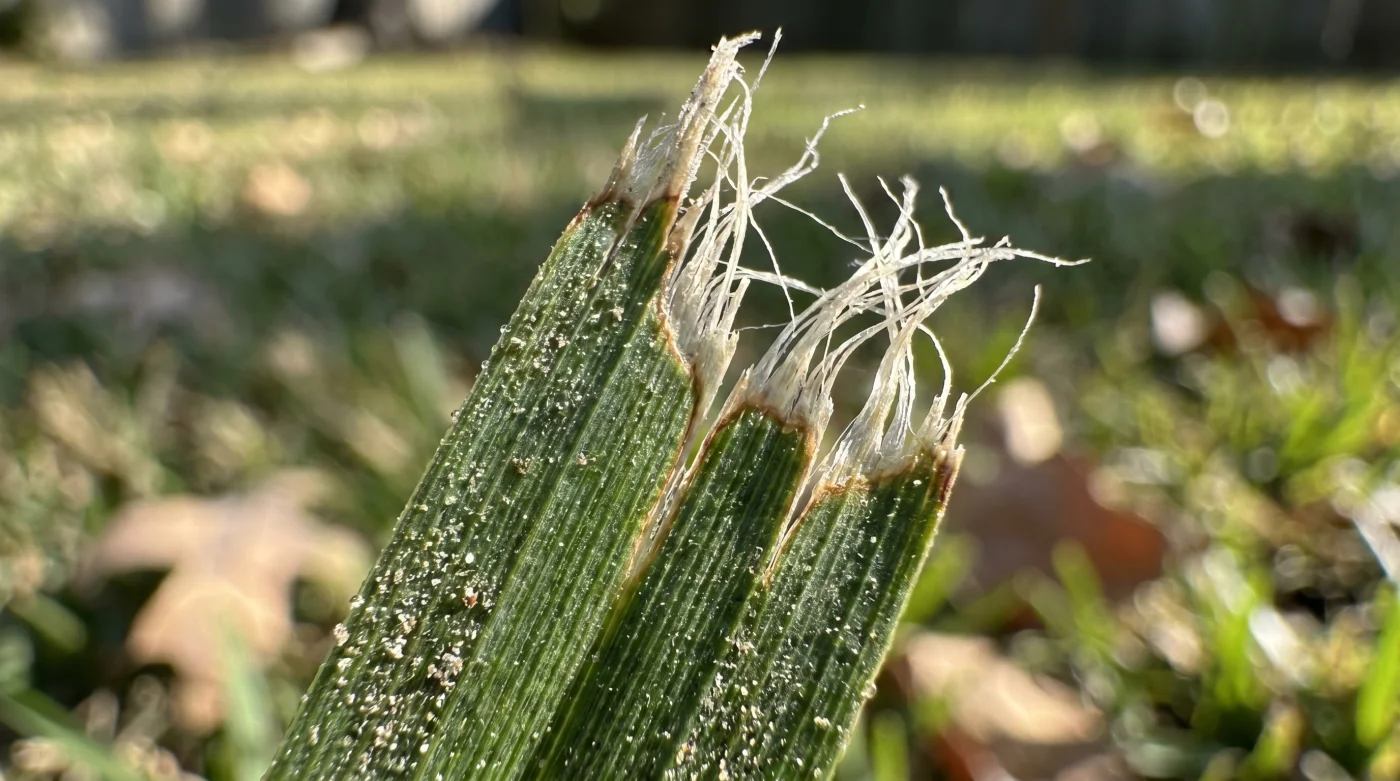
When a steel blade loses its factory edge, it stops slicing. It violently tears the stalks. A clean cut from a sharp edge seals over within hours, preserving the plant’s vital internal moisture. A torn, frayed tip creates a massive, jagged surface area that takes days to heal.
This ragged wound acts like an open door for ambient fungal spores. The grass loses water rapidly through the frayed ends, drying out the top centimetre of the plant, which quickly bleaches yellow in the midday sun. What you are seeing from the patio is not starvation; it is mass trauma across thousands of individual plants.
By dispensing with the persistent myth of fertiliser deficiency, you can fix the root cause instantly. You do not need a degree in turf management or a shed full of specialised, heavy chemicals. You just need to understand how to maintain a sharp piece of metal.
Arthur Pendelton, 62, has been the head groundsman at a Sussex village cricket club for three decades. He can walk onto a pitch, pluck a single blade of grass, and tell you instantly if the heavy machinery needs maintenance. ‘People spend absolute fortunes on fancy feeds,’ Arthur notes, leaning on his trusty cylinder mower. ‘But if you look closely at their domestic lawns, the tips look like they have been chewed by a blunt set of pliers. I touch up my blades constantly. It takes a minute, and it saves me hundreds of pounds in turf disease treatments over the summer.’
Deep Segmentation: Assessing Your Green Canvas
Not every British garden is treated equally. The way you manage this mechanical reality depends heavily on your usage and how you interact with your outdoor space throughout the changing seasons.
For the weekend perfectionist, the striped lawn is a matter of immense pride. Your margin for error shrinks considerably. You likely mow twice a week during the peak growth months of May and June. For you, this one-minute masterclass isn’t a seasonal chore; it is a rapid, bi-weekly ritual.
- Why chefs refuse to wash cast iron skillets with boiling water
- Apple technicians warn against this common overnight charging habit
- The diamond-cut alloy wheel feature secretly costing UK drivers thousands in repairs
- Women over 50 are ditching hyaluronic acid in winter-here is the clinical reason why
- The single sheet of parchment paper error ruining your air fryer chips
- The prohibited boiler setting plumbers use to slash winter heating bills by 300 pounds
- Mechanics reveal the 10-second WD-40 trick that restores clouded headlamps instantly
The cleaner the cut, the sharper the light reflects off the bent grass, creating those vivid, alternating contrast lines. A dull blade scatters the light, making your hard-won stripes look muddy and poorly defined, regardless of the heavy roller on the back of your machine.
For the busy parent, the lawn is a chaotic, joyous playground. It endures muddy football boots, heavy paddling pools, and endless foot traffic. You might only drag the mower out when the grass threatens to completely swallow the children’s toys.
Because you cut less frequently, you are often taking off a massive amount of length at once. This creates immense mechanical motor strain on the rotating shaft and the cutting edge. A dull blade in long, damp grass doesn’t just tear the tips; it violently yanks the root system, destabilising the entire plant. A rapid sharpen before you start makes a heavy job remarkably light.
For the wildflower tolerator, you might leave broad, untamed patches to grow wild for the local bees, maintaining only a network of winding, functional paths. These paths need to be highly durable and clearly defined.
The visual contrast between the wild meadow and the neat path is only effective if the path looks highly deliberate. A frayed yellowing walkway ruins aesthetics completely. Keeping a keen edge on your rotary blade ensures your paths remain a vivid, healthy green, cleanly demarcated against the tall fescues and clovers.
Mindful Application: The Sixty-Second Metal Reset
Getting this right requires no heavy machinery or intimidating workshop skills. It is a quiet, deliberate interaction with your garden tools. You are simply restoring the original factory bevel, removing the tiny burrs and nicks accumulated from hidden pebbles and hardened twigs.
Always begin by disconnecting the power source completely. Remove the spark plug lead or physically detach the lithium battery. This is absolutely non-negotiable for your safety. Tip the mower backward on its rear wheels to expose the metal deck, ensuring the air filter points towards the sky so the oil doesn’t flood the engine block.
You do not need to completely remove the blade for a quick, weekly maintenance hone. You just need a standard ten-inch bastard-cut mill file, or a cheap aluminium-oxide sharpening stone attachment for your cordless drill. The goal is a rough, working edge, not a polished razor finish.
Focus entirely on the top edge of the blade. Follow the existing metal angle, which is usually set at around forty-five degrees. Do not overcomplicate the geometry; the file will glide with a satisfying, rasping bite when it finds the correct plane.
- Hold the metal file firmly in both hands, using your body weight to apply even pressure.
- Push the file down the cutting edge in one smooth, sweeping motion, moving from the centre to the tip.
- Never pull the file backward across the metal; a file only cuts efficiently on the forward push stroke.
- Three to four firm, deliberate strokes per side are usually enough to restore a brilliant working edge.
- Feel the back of the blade for a slight metal burr; once you feel that rough lip, the front edge is sharp enough to cut grass cleanly.
The Bigger Picture: Beyond the Green
Mastering this simple, deeply physical act changes your entire relationship with your garden space. You stop treating the visual symptoms with expensive, plastic-bottled chemical remedies, and start actively addressing the structural health of the micro-environment.
When your grass heals swiftly from a brilliantly clean cut, the soil retains vital moisture, requiring significantly less watering during a hot July dry spell. The roots grow deeper, finding their own natural sustenance rather than relying on artificial nitrogen dumps that eventually wash into local waterways.
It is a quiet, satisfying victory over the frustrating, throwaway culture of modern lawn care. By spending one single minute understanding the physical friction between steel and sap, you reclaim total control over the health of your garden.
You step back onto the patio, not frustrated by a confusing chemical mystery, but satisfied by a reliable mechanical truth. The grass is cut cleanly, the morning mist has cleared, and the garden breathes a little easier.
A lawn is only as healthy as the tool used to cut it; master the blade, and the soil will look after itself.
| Key Point | Detail | Added Value for the Reader |
|---|---|---|
| Torn Grass Tips | Jagged, frayed edges that dry out rapidly and turn pale yellow. | Saves you from misdiagnosing the issue and buying unnecessary chemical fertilisers. |
| Clean Sliced Tips | A flat, sealed cut that traps moisture inside the grass stalk. | Ensures the lawn stays deeply green even during hot, dry summer weeks. |
| Weekly Honing | Three strokes of a hand file while the blade remains on the mower. | Takes exactly one minute, drastically reducing engine strain and fuel consumption. |
Frequently Asked Questions
Do I need to balance the blade if I only sharpen it lightly?
For a quick one-minute maintenance hone using a hand file, balancing is rarely necessary. You are removing microscopic amounts of metal. Only balance the blade if you are doing a heavy grind to remove deep stone chips.Can I use an angle grinder instead of a hand file?
You can, but it is incredibly easy to overheat the steel. If the edge turns blue, you have ruined the heat treatment, and the blade will go blunt incredibly fast. A hand file is infinitely safer and more controlled.How sharp should a lawn mower blade actually be?
It should be roughly as sharp as a standard butter knife. You do not want a razor edge; a razor edge is far too thin and will fold over the moment it hits a stray twig or a dense patch of thatch.Will a sharp blade stop my mower from stalling in long grass?
Absolutely. A blunt blade acts like a heavy club, dragging the engine down. A sharp edge slices cleanly, allowing the engine to maintain high revolutions even in dense, damp spring growth.Should I still apply lawn feed if the yellowing stops?
Yes, but you can return to a normal, seasonal schedule rather than panic-feeding. Feed lightly in spring and autumn, and let the clean cuts do the heavy lifting during the warm summer months.