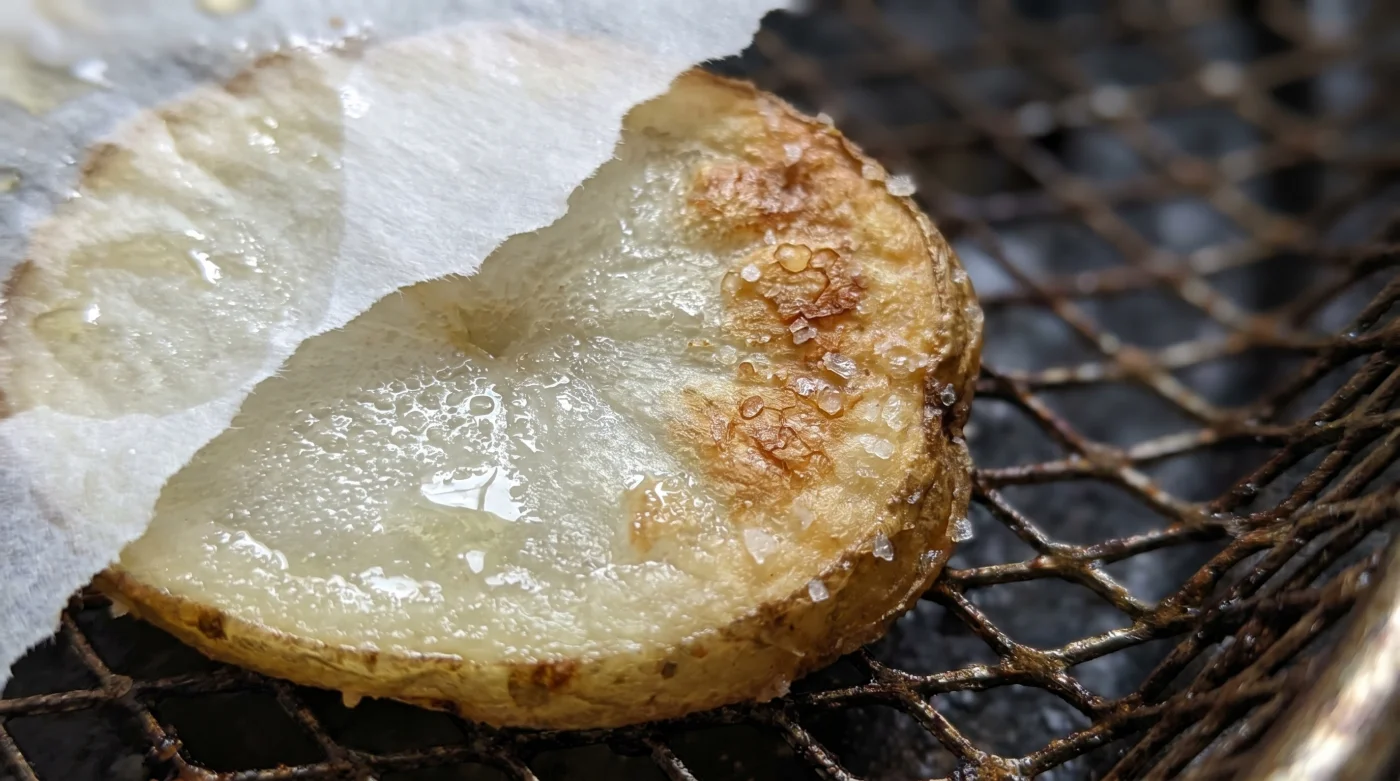
Picture a Tuesday evening in a terraced kitchen. Rain is lashing against the glass, masking the faint, rhythmic hum of the extractor fan overhead. You pull the drawer of your air fryer open, expecting the golden, rigid crackle of perfectly roasted potatoes filling the room with the scent of hot starch and sea salt.
Instead, you find limp wedges steaming gently on a crinkled sheet of parchment. They bend like damp cardboard. You added the liner to save yourself five minutes at the sink, but in doing so, you traded away the core capability of the very appliance you bought to speed up your evening.
We have been entirely sold a modern convenience myth. The quick fix of a disposable paper layer feels like a small victory against the tedious chore of scrubbing a greasy basket after a long, exhausting workday. The marketing promises a frictionless life where nothing sticks and nothing requires elbow grease.
Yet, the mechanics of a dry-heat cyclone rely on unimpeded violence to function correctly. Air must strike the metal, rebound with force, and envelop the food from every possible angle. By introducing a physical barrier beneath your chips, you are actively boiling your potatoes in their own escaping water.
The Suffocation of the Cyclone
Think of your countertop machine not as a miniature oven, but as an aggressive wind tunnel. The perforated grate at the base is not merely a shelf to hold your dinner; it is the engine room of the Maillard reaction. That reaction, the browning of amino acids and sugars, requires intense, dry heat.
When you place a solid sheet over those perfectly engineered holes, you create a sweat lodge. The moisture pulled from the raw potato hits the paper, pools in the centre, and turns into a thick layer of steam, blocking the surface temperature from ever reaching the necessary 150°C.
You are effectively steaming a roast potato, trapping it in a humid microclimate that destroys any chance of a glass-like crust forming. The heat becomes stagnant. The fan above works twice as hard to push air around an object that is now sitting in a puddle of its own making.
The true time-saving hack is not avoiding the washing up; it is letting the machine work flawlessly. Removing the physical barrier entirely allows the crisp exterior to naturally release from the non-stick grate without a single fight. When food is properly seared, it ceases to cling to the metal.
Consider Thomas Aris, a 42-year-old development chef working in a Yorkshire test kitchen. For months, he battled with entirely inconsistent textures in root vegetables while writing fifty recipes for a major appliance brand. He found that standard machines move air at roughly forty miles per hour.
When he eventually stripped the baskets bare, the results were staggering. Cooking times dropped by twenty percent immediately. “The grate,” Thomas noted, “acts like a suspension bridge, letting fat drip away completely. Cover it up, and you’re just making a puddle.”
Mapping Your Potato Strategy
Not every chip requires the exact same treatment, but absolutely none of them require a paper shield to cook properly. Let us categorise how you approach the basket based on what you are trying to achieve on a highly pressured weeknight. The method changes slightly depending on the raw materials.
For the traditionalist making proper, thick-cut pub chips, bare metal is an absolute non-negotiable factor. Toss hand-cut Maris Pipers in a teaspoon of rapeseed oil and place them on the grate. The sheer force of the unimpeded air circulation will create a flawless, shattered-glass crust.
When cooking straight from the freezer, moisture management becomes even more critical to your success. Ice crystals melt immediately upon hitting the intense heat. The machine is designed to let this flash-melted water drop away instantly into the void below the grate.
If a paper liner is present, that water has nowhere to go. You get a soggy bottom that stubbornly refuses to crisp, no matter how long you leave the drawer shut. Bare metal allows that excess water to drain into the lower catch-pan entirely out of the way.
For delicate, spiced potato wedges coated in paprika or cornflour, you might fear the spices burning on the floor of the appliance. You might instinctively reach for a liner to protect the powdery coating from scorching against the hot metal.
The true solution is temperature control rather than paper. Drop the heat by ten degrees and shake the basket twice; the cornflour needs aggressive, dry air to form a proper shell. The starch will bind to the potato, not the grate.
Mindful Application
Abandoning the parchment liner requires a slight adjustment to how you handle the immediate aftermath of cooking. We are swapping a poorly cooked, disappointing dinner for a three-minute clean-up routine that actually works with the materials in front of you.
Instead of dreading the sink and leaving the basket to harden overnight, treat the metal with immediate care. Let it cool slightly first, but deal with the drawer while the rendered fats and starches are still relatively liquid and pliable.
A mindful approach at the sink negates the need for disposable products entirely. Implement this sequence to keep your machine pristine:
- The Pre-Wash Soak: Fill the warm, empty drawer with hot tap water and a single drop of washing-up liquid before you sit down to eat.
- The Gentle Brush: Return with your empty plate; any residual starch will have dissolved. A soft brush clears the grate in thirty seconds.
- The Air Dry: Shake off excess water and slide the drawer back in. The residual heat of the unplugged machine dries it perfectly.
- Tactical Toolkit: Set to 195°C for standard potatoes. One half-tablespoon of oil. Shake at minute eight and fourteen. Cook for eighteen minutes.
We often layer these quick fixes over our daily tasks, assuming that a product sold to us as a solution must inherently improve our lives. The disposable liner industry thrives heavily on our collective exhaustion and our deeply ingrained fear of scrubbing pots after a long day.
The Architecture of Convenience
Yet, true efficiency lies in deeply understanding the tools we already possess in our kitchens. When you deliberately remove that crinkled sheet of paper from the basket, you align yourself with the physical reality of how the appliance actually functions. You stop fighting the engineering.
There is a quiet, profound satisfaction in doing slightly less but achieving noticeably more. In refusing the extra purchase and the extra waste, you allow the fierce wind to do exactly what it must, leaving you with a plate of chips that finally live up to their initial, golden promise.
“True efficiency in the kitchen never comes from buying another accessory; it comes from allowing the tools you already own to function exactly as their engineers intended.”
| Key Point | Detail | Added Value for the Reader |
|---|---|---|
| Airflow Dynamics | Bare metal allows air to hit the underside of the food at 40mph. | Guarantees a glass-like crust without extending cooking times. |
| Moisture Management | Water drops away from the food into the lower catch-pan. | Prevents the soggy bottoms associated with steaming. |
| The Maillard Reaction | Unimpeded heat allows the surface to exceed 150°C quickly. | Creates deep, savoury browning and natural non-stick properties. |
Frequently Asked Questions
Won’t my air fryer basket get ruined without a liner?
Not at all. The non-stick coating is built for high heat. Provided you wash it gently with a soft brush rather than an abrasive scourer, the metal will remain pristine for years.What if my chips are completely stuck to the grate?
This usually means you tried to turn them too early. Starch clings to metal until the outer shell seals and crisps. Give them another four minutes, and they will naturally release.Can I use foil instead of parchment paper?
Foil causes the exact same airflow disruption as paper. It will trap rendered fats and water, resulting in greasy, limp food rather than a crisp finish.How do I stop delicate fish from flaking apart on the bare metal?
A microscopic wipe of rapeseed oil on the cold grate before cooking is enough. Treat the fish gently, and remember that high, dry heat seals the proteins quickly.Do I need to soak the basket overnight if the fat hardens?
Avoid overnight soaking, as prolonged submersion can degrade the coating. A ten-minute soak with warm water and a drop of washing-up liquid immediately after dinner is vastly superior.